“When you are my age you will understand.”

Evinrude Motor

Good stories have clear characterization, character being defines as desire, drive, ability, compassion and perspective all of which change over a lifetime.  Here’s a simple example of those changes from my own family history. I’ve been thinking about this lately as I ponder my upcoming knee replacement.

Philo Howard, my mother’s brother, was  a frank, funny, energetic man. At sixteen, he ran away to Canada from his home in Houston. There, he lied about his age and joined the Canadian Royal Air Force to fight in WWII, which the US had not yet entered. His whereabouts were determined by my dad’s mother who read an article in the Houston paper listing Texas volunteers. Uncle Philo was returned to the bosom of his family forthwith. Several years later he enlisted in  the American Air Corps and flew P-51s over Europe.

My family had a party in Houston in 2003 to celebrate what would have been my late father’s 100th birthday. My uncle, who recently had his pacemaker replaced, couldn’t make the party. He emailed me this tribute to be read at the celebration. My dad, Judge Wilmer Hunt, was nearly twenty-years his senior. To his great sorrow he was denied military service due to his age,  very flat feet and a knee injured by my mother. (That’s another story.) The setting of Philo’s account is the rich farmland of eastern Texas in the 50’s. By prison, my uncle was referring to a pea farm, as they were called back then. They were minimum security prisons where inmates grew food for the prison system.

Wilmer was my favorite, because he liked to fish and many times took me along. One time he took me to Kemah and we got in a small skiff and towed [it] out to the middle of the bay for four hours. I was always a little hyper, and I almost jumped out of the boat after about an hour. Wilmer seeing this, started telling me stories. As I remember, this calmed me down a bit and I caught some fish.

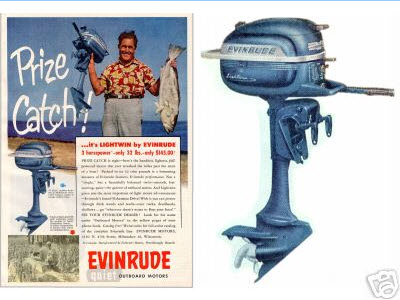
Being a Judge he had access to a prison and one near Brazoria had a great fishing pond. He and I went there about three times. It seemed I always ended up having  to carry a small Outboard motor from the parking lot to the lake each time. I asked him why, and he said “when you are my age you will understand.”

It takes a musician to find a musician

  
The Story of Blondel the Minstrel and King Richard the Lionheart

There is a legend that when King Richard the Lionheart disappeared a faithful squire named Blondel the Minstrel went in search of him. As a wandering minstrel Blondel travelled for months over central Europe, vainly seeking for news of his friend, the King of England. At last one day, while singing one of Richard’s favorite songs near the walls of the castle where the king was confined, Blondel heard the song repeated from a window. Blondel the Minstrel recognized the voice of King Richard. From the window Richard told him to let the English people and the people of Europe know where he was confined, and Blondel the minstrel immediately went upon his mission.

Europe was astounded to learn that the brave King Richard of England, the great champion of Christendom, was imprisoned. The story of Blondel the Minstrel might not be true, but what is true is that England offered to ransom Richard, that the Pope interceded for him and that finally it was agreed that King Richard should be given up on the payment of a very large sum of money in the form of a ransom.

Many of the nobles and knights in Queen Eleanor’s Duchy of Aquitaine were troubadours. Queens Eleanor of Aquitaine ( Richard’s mother )and Queen Berengaria (Richard’s wife ) raised the ransom. King Richard came home in 1194, after a year and a half of captivity. His grateful thanks were given to his faithful friend Blondel the Minstrel.

http://m.lordsandladies.org/blondel-the-minstrel.htm

Hemingway and Radio

Hemingway and the Radio

Yesterday my good friend Maria Gunn sent me an article from the 9/14/2015 issue of The New Yorker. The article by John McPhee is called “Omission.”  Maria has been good enough to give me feedback on a piece of mine. I warned her that the work needs cutting, and she sent me this apres pot article.

In making his point about the importance of lean writing, McPhee rightly mentions the man considered to be its greatest champion: Earnest Hemingway. McPhee quotes, “If a writer of prose knows enough about what he is writing about he may omit things he knows and the reader, if the writer is writing truly enough, will have a feeling of those things as strongly as though the writer had stated them. The dignity of movement of an iceberg is due to only one-eighth of it being above the water.”

Clearly Hemingway was influenced by his years as a journalist. Writing to the point is the point of journalism. But I wonder if Papa wasn’t influenced also by radio, arguably the dominant medium of his time. The sparely written radio dramas of the ’30’s and ’40s were very powerful. Witness the national hysteria over Orson Wells’ 1938 broadcast of The War of the Worlds. People who missed the disclaimer in the beginning tuned in to hear a string of fictional news casts about enormous alien war machines ravaging New Jersey. So terrifying were these terse accounts that a few people attempted suicide during the show, clear evidence of the power of omission.

The Trunk in the Attic

The Trunk in the Attic

I struggle with the complexity of the stories and the accessibility of language in my two novels. Will a young reader stumble on a word more common in the books of my own childhood than in hers? Will she finish a book with so many characters and twists?

The point I’ve come to is that while I certainly do not wish to confuse, bore or frustrate readers, I do hope to pass on some of the richness of detail I was fortunate enough to be exposed to not only in my early readings, but in my own childhood. My father, a character himself, devoured sea stories, and could quote Shakespeare and Walter Scott at the drop of the hat. My mother, a painter and poet, quoted the Romantic poets almost daily. My big sister Lalu is a marvelous storyteller herself and read me Thurber with a wicked giggle. My late sister Robin McCorquodale published several acclaimed books and sang mezzo soprano in New York. My brother Grainger Hunt sang rock-and-roll and played Henry IV on stage. My own literary influences were Shakespeare, Homer, Twain, Verne, Stevenson, Doyle, Wells, Hammett, Hellman, O’Brian, Chandler and McMurtry. I read them still.

Continue reading

Good Stories

Ginevra de' Benci c. 1474

Everybody has an interesting story, but it’s generally not the one they’ll tell you first. How Bob kicked the winning field goal in the last high school game is interesting to Bob. It’s the story that makes Bob feel giddy as he anticipates excitement rising in your expression. To get a grand sense of this, read William Shatner’s or Donald Trump’s autobiographies. They’re stuffed with vignettes that portray them as brave, smart and very cool. (I actually enjoyed Shatner’s.) They’re the same stories you’ve been button-holed in the corner at a cocktail party to hear. There are one or two in this blog to be honest.

The good stories are the ones you pull out of yourself like arrowheads. They make you squirm. They’re embarrassing or shameful – so much so they’re likely to be embedded in fiction, or told as though they happened to someone else.

Those are the ones I want to hear, and write. Most of us, I suspect, have several. But, like I say, they’re hard to tell.

*The painting is Leonardo DaVinci’s Ginevra de’ Benci, c. 1474.

Editors

Maurice de Vlaminck Painting

I’m at the Willamette Writers Conference in Portland, OR this weekend pitching my new book. I must say the more editors I know, the more I like them. Publishers, bless them all, love numbers. Editors love words. They are the gardeners of books.

*Painting by Maurice de Vlaminck.

Art doesn’t change. You do.

Duane Allman Anthology

One of my favorite blues songs is Boz Scagg’s “Loan Me a Dime.” My favorite version – and there are many fine ones – is the one he recorded with the Allman Brothers in Muscle Shoals in 1969.

A decade later, I played along with the song a hundred times on my Strat in my Mill Valley basement studio . At each drop of the needle, I waited patiently for the vocal to end, so I could I could play along with Duane’s passionate but nuanced solo. Among the finest blues guitarists ever, Duane had that rare combination of flash and reserve I so admire. And this song is arguably one of his best solos.

Many, many years have passed. Now, when I play this same cut in my Seattle basement studio, I listen carefully to Boz’s heartfelt vocal. When Duane comes in, I often find myself starting the song over. Maybe it’s that I’ve heard the lead so many times, that it no longer holds my attention so closely. Perhaps it’s that I hardly touch that old Strat of mine anymore. I’m much more about my acoustics. Or maybe it’s because I understand more clearly what the singer means when he says, “Somebody loan me a dime. I’ve got to call my old time used-to-be.”

Cynics

Nay Sayer

Pity the crank. The nay sayer. The lone member of the opposition in all things.

Or rather don’t.

Pity doesn’t work. I tried. A cynic will try to entangle you in his nets, and drag you down saying, “See? I told you so.”

Remember the words of Oscar Wilde: “A cynic is a man who knows the price of everything, and the value of nothing.”

Follow the wisdom of George Carlin who said, “Scratch any cynic and you will find a disappointed idealist.”

I urge you, don’t be tempted to aid a cynic. He’ll turn you into a symbol of the success of his own failure, or the failure of success itself.

Editing Help from Brooke Wolff

Edit with Red2

I would like to acknowledge the professional editing help of Los Angeles writer/editor Brooke Wolff. I sent Brooke the entire manuscript of my pirate novel a month ago. Two weeks later she had finished the edit and returned it to me with enough red marks to keep me from making a fool of myself when I send the manuscript out to agents and publishers. In addition we had a ninety minute phone call to discuss certain aspects of character development, continuity and most especially how to more finely tune the book to my audience. Brooke felt the two main characters need to be two years older.

She was absolutely right. The story began as a middle grade novel. As I wrote, however, it morphed toward being young adult. What had happened was the characters began to act more maturely due to the circumstances of being with two boys their age on a pirate ship 300 years from home. At this point I could have stopped my forward progress and gone back to the beginning. But on the advice of experience, I worried I would lose momentum and possibly even the heart to finish it. So I kept going.

Continue reading

Stealing Apollo – The Story Behind the Story

Frogronaut 1

Some years ago I wrote a film script that follows the shenanigans of a gang of men who steal an Apollo spacecraft from a display in a Vegas casino in broad daylight. Here’s a memory from my boyhood that says something about a guy who would write such a story three decades later.

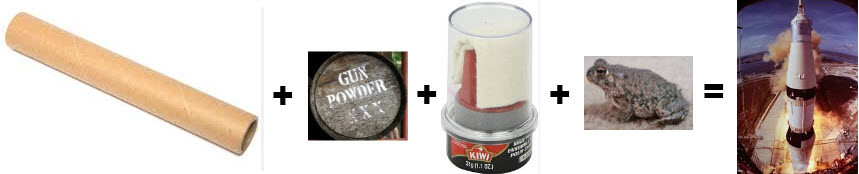
As thirteen-years old Houstonians, my next door neighbor Ned and I built a piloted rocket ship. I use the word piloted loosely. Our astronaut had no control over his spacecraft, but then neither did Yuri Gagarin, who earlier that year became the first man to orbit Earth. Not being funded by a national space budget, we constructed our capsule from a shoe polishing kit and a three-foot mailing tube we filled with homemade gunpowder.

Yes, homemade gunpowder.

Continue reading

Songwriting is the charmer’s art.

Clefs

Songwriting is the charmer’s art. When I first hear a song that moves me, I become thoughtlessly rude. My senses shift from whatever or whomever held my attention to the source. I am instantly captivated by a voice. A groove. A line of melody, A wave of harmony. Songs like John and Paul’s A Day in the Life, Leonard Cohen’s Suzanne, Joan Baez’ version of Tom Paxton’s There But By Fortune, Pentangle’s version of Lord Franklin, Jackson Browne’s Our Lady of the Well, Jimi’s take on All Along the Watchtower.
Continue reading

Eric Ode and John Skewes at Kit Lit Drink Night

Eric and John

Yes, Nancy. Children’s writers and illustrators do drink beer. But I assure you it’s only to lubricate the wheels of imagination and cooperation. This event was thrown by our very own Society of Children’s Book Writers and Illustrators of Western Washington in Seattle. Illustrator John Skewes and author Eric Ode collaborated on these two new books from the nationally acclaimed local publisher Sasquatch Books.
Continue reading

Provenance

Provenance

Songs, like antiques, are more valuable with a bit of provenance. Document your music with a piece of background.

What happens between songs on stage is important. As you check your tuning, tell a story about the next number. Draw the listener in. Be clear. Don’t rush into it. Allow the moment of the last song to fade gracefully. Then set the stage for the next one with a little bit of story.

“I wrote this about my wife during a trial separation.”
“I derived the next song from my great-great-grandmother’s diary written when she was a teenager in Northern Virginia during the Civil War.”
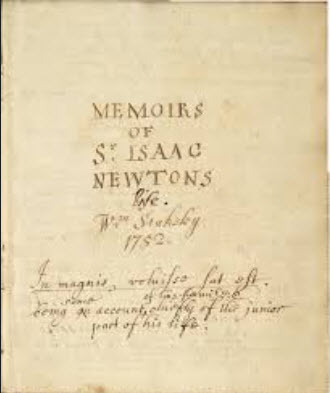
“This is about a certain day in the life of Sir Isaac Newton.”

Prefacing your songs in this way will help guide your audience into the moment you’ve prepared for them.