Backstories of Backstories

Every story has a backstory. Every time machine story has two.

The backstory of the Pirates of Time, my current effort, is the love between pseudo-pirate Captain Swiftfoot Darkrunner and Blue Leaf, princess of the Nighthawk People.  This love is vital to my main character Erin Isabelle Spotsworth three-hundred years later.  Though only obliquely related to my tale, Pirates of Time could not have been written were it not for a number of fiction and non-fiction books I read as a child. This post is an attempt to honor these stories in enriching my story and indeed, my life.

Pocahontas and John Smith

The history of Pocahontas and Captain John Smith

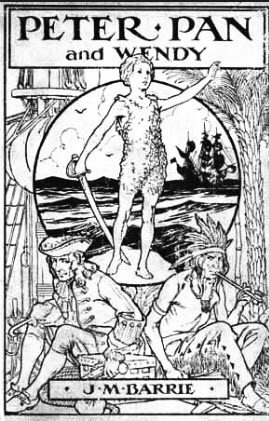
Wendy

Peter Pan and other related works of J.M. Barrie

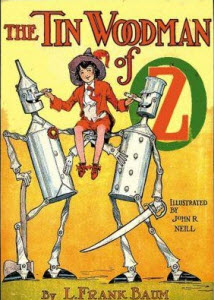
TinWoodmanofOz

The novels of L. Frank Baum

ForgetfulProfessor

The rich literary history of forgetful professors such as Per Lindroth’s book.

Chuck Berry – American Poet

I was talking about Chuck Berry’s poetry recently to someone recently, who laughed and asked, “Poetry? Really?”

For those of who associate 50’s poetry solely with the Beat poets like Ginsberg and Ferlingetti, I say, open your mind. No one supasses Chuck for the poetry of sexual, political and racial freedom.   If ever there was a man, to quote Bob Dylan, who “danced beneath the diamond sky with one hand waving free,” it was Chuck. He bolted through life with his eyes wide open, expecting to be cheated (as he often was), daring the authorities to stop him from living his life as a free man.  He paid the price with three prison terms, none of which broke him.  Like O’Henry, he wasn’t the first poet to make mistakes.  A great humorist, story teller and poet of the open road in the tradition of Mark Twain, Robert Service and Jack Kerouac, Chuck served his poetry straight-up.

Before reading Chuck’s lyrics as poetry, I suggest you put away your prejudices – all of them – and see the film Hail! Hail! Rock & Roll. Then read  Chuck Berry: The Autobiography, do so as soon as possible.

From the new time travel manuscript

Sea Battle

With Sophie sleeping comfortably, Erin decided to venture above for the first time since the battle. The deck was bathed in bright, tropical sunlight. The Mansions of Night was on a port tack heading west south-west several hundred yards behind Velocity.

Erin found Mera at the stern rail watching a lone British frigate following from halfway to the horizon.

“That’s Insuperable,” Mera said solemnly. “She was on our heels when we left Sugar Bowl Bay. We’ve put three miles on her since.”

“I’m surprised your mom doesn’t join with Velocity and attack. It’s two to one.”

“Mother thinks Triumph and Lucy B are just over the rim, or they wouldn’t risk stalking us. Lucy B has jib damage and Triumph is holed below the water line. When they’ve made repairs, they’ll likely start closing on us. They’ve more sail than our ships.”

Erin stared across the heaving sea imagining the three frigates drawing closer every day until their twenty-four pound “bruisers”, as Jennie called the British cannons, could “punch us through at thousand yards.” Nell and Darkrunner would certainly turn and attack, as they had before. But there would be no surprise this time. Just smashing long shots followed by a broadside brawl which Jenny didn’t believe the pirate ships could long stand.

“Don’t fret too much,” Mera said watching Erin’s face. “We’ve still got the best captains on the Deep Blue Sea.”

Erin tried her best to smile, but couldn’t help but worry at the odds.

[Thanks to Chris Hunt for providing reference to image:  Battle of Quiberon Bay: the Day After (Richard Wright 1760)]

Careened

Careened

Careened

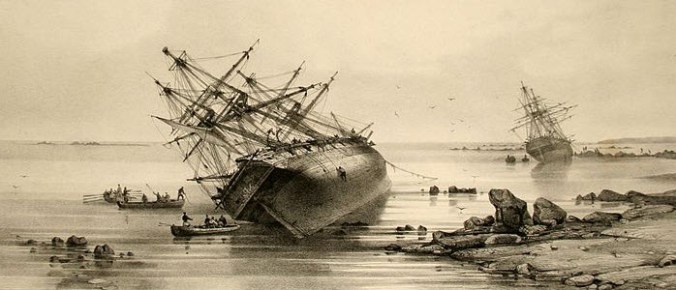
When Erin and Ariel first saw Nell Flander’s Mansions of Nyx, the ship was careened on lush Sugar Bowl Island in the Deep Blue Sea. This painting is of a different ship* on a barren coast. You can observe a member of the crew suspended from a line scraping the hull free of barnicles. This had to be done from time to time on all ships, especially a ship of war. A clean hull meant a faster ship.

*Source: Jules Dumont d’Urville (1846) Voyage au Pôle Sud et dans l’Océanie sur les corvettes L’Astrolabe et La Zélée exécuté par ordre du Roi Pendant les Années 1837–1838–1839–1840 sous le commandement de M. Dumont-d’Urville.

The Blow

The Blow

An excerpt from Chapter 23 of the new novel. The girls (disguised as boys) are sailing on Captain Swiftfoot Darkrunner’s frigate Velocity. Erin is known to captain and crew as Aaron Spotsworth; Sophie, as Michael Claude. The day after they’ve been promoted to midshipmen, the ship enters a terrible storm. Mr. MacLeish is the boatswain.

“Well done, Mr. McLeish,” Darkrunner told him.

“Oh, thank you, sir.”

“Is there anything you need?” Captain Darkrunner asked.

“Only a dozen more sailors, Sir,” MacLeish said. “But we’ll do with the ones we have. I don’t wish to give them airs, but they’re the best I’ve ‘ad the honor to sail with.”

“Good man, Mr. MacLeish,” said the captain. “But if you have a deck hand to spare, I think we need two more hands at the wheel. I fear Mr. Short won’t be able to hold her steady alone through his watch.”

“Aye, Sir.” Mr. MacLeish said before descending the companionway.

Erin shielded her eyes from the rain as she watched two men trim the foresail above. “It’s amazing they can hang on in this weather.”

“Sadly, not all do,” he said staring off at the ragged gray clouds advancing from the north. “A boy not much older than you was struck by a loose boom a fortnight ago and plunged to his death right where you’re standing.”

Erin quickly shifted from the spot and searched the boards for signs of blood.

“It was  appalling to see the lad splayed out like a broken doll.” The captain hesitated a moment before he was able to continue. “He was French — a prisoner shipmate of Mr. Petit’s until they joined the mutiny. Poor Petit scrubbed the deck furiously for an hour, sobbing like a child.”

Erin felt frozen where she stood.  She felt uneasy staring down, but didn’t want to look  up into the captain’s face.

“I’m sorry, Mr. Spotsworth,” the captain said swiping his hand across his eyes. “I didn’t mean to burden you with my woes.”

“Oh, no, sir,” Erin said lifting her eyes. “It’s quite alright. I know how awful it is to lose a friend.”

Continue reading

research on the action sequence of firing a cannon

Gun Drill aboard USS Constitution

I am at the scene in my pirate novel where my heroines, who have just been made midshipmen (yes, midshipmen), need to be trained in how to fire cannons called 12-pounders.

As I mentioned before I’ve read several of the Master and Commander book series by Patrick O’Brian. There is a detailed description in the fourth chapter of the book by that title. But even after having read it several times, I still found it difficult to visualize what the mechanisms looked like and exactly how the crew performed their tasks. The best representation I found was a youtube video of the crew of the USS Constitution running through the identical drill. The ship is of a later date than my Velocity, and the cannon is a 24-pounder, but the process is exactly as O’Brian describes it. Cannon technology didn’t significantly change until the advent of the breech loaders in the mid-nineteenth century. Click on the image below to see the video.

Edges

Climbing Pitons

I attended the Willamette Writers Conference in Portland last week. For those of you who don’t know of it, it’s my favorite.  The three-day conference has excellent speakers and is very well-managed. What it offers that is of special benefit to me is direct access to industry people willing to listen to one-on-one and group pitches.

One of the seminars I attended was a talk on writing memoirs by Jennifer Lauck. I plan to begin a memoir in about eighteen months, so I was keen to learn something about a subject which has puzzled me for a long time.  How does one write truthfully about what happened long ago? I have my memories of course, and plan to talk to people I knew at that time. But how does one construct something real from the muddle and mist that momories oft are?

I don’t want to give away too much of what Jennifer had to say. (I did that at a conference once and the lecturer let me know he didn’t appreciate it. It was, as he said, his “bread and butter.”) I’ll just leave you, however, with a helpful quote she gave us from Bernard Cooper, the American novelist. The quote states, “Only when the infinite has edges am I capable of making art.”

With that in mind, I plan to find those edges in my story that I know are the most real.  I do have some records of these edges, namely half a dozen songs I wrote during that period, photographs my wife took and, most importantly, eight hours of audio with one of the principles in the story. My idea is to drive these certainties into my tale like the pitons climbers use to secure their ropes to, as they ascend.  Climbers, I would imagine, don’t view a distant and unfamiliar mountain face and know how exactly they will climb it. It is only as they approach the rock and study its gross formations, that they rough out their possible routes. And it is not until they are literally face to face with the mountain, that really decide which paths are to be trusted, and which not.  Surrounded by the infinite, they feel their way to the summit along these edges using little more than their intuition, fingertips and shoe leather.

A piece of art that to me embodies this of an infinite with edges is John Lennon’s “Across the Universe.”

Words are flowing out like
Endless rain into a paper cup
They slither wildly as they slip away across the universe.
Pools of sorrow waves of joy
Are drifting through my opened mind
Possessing and caressing me.

Jai Guru Deva. Om
Nothing’s gonna change my world

Images of broken light, which
Dance before me like a million eyes,
They call me on and on across the universe.
Thoughts meander like a
Restless wind inside a letter box
They tumble blindly as they make their way across the universe.

Jai Guru Deva. Om
Nothing’s gonna change my world

Sounds of laughter, shades of life
Are ringing through my opened ears
Inciting and inviting me.
Limitless undying love, which
Shines around me like a million suns,
It calls me on and on across the universe

Jai Guru Deva.
Jai Guru Deva.
Jai Guru Deva.
Nothing’s gonna change my world

Here are a few links that relate to this post.

Jennifer Lauck:  http://www.jenniferlauck.com/
Bernard Cooper quote: http://www.tumblr.com/tagged/bernard_cooper
If you’re considering going to a conference next year, I urge you to get on their mailing list: http://www.willamettewriters.com/1/join.php .

As I Liked It

Seattle Shakespeare

I’ve been a season ticket holder to the Seattle Shakespeare Company’s season for many years now. Last night I saw their “As You Like It” below the Space Needle at the Center House Theater.

I’ve got to say Orlando (Nathan Graham Smith) had a bit of a rocky opening. There are moments in even a good actor’s career when he can do no more than summon his lines. And though this was one of them, the awkwardness moment passed quickly, and Mr. Smith led the play very well indeed.

The story has a rather serious beginning, as all good comedies should. Ray Gonzales and Keith Dahlgren played very credible dukes with lots of slapping around, which added to the drama in the resolution of the play.

Jake Ynzunza portrayed well the oafish wrestler Charles and the bumpkin rube William.  The characters played by Bill Johns and David Klein were not the most interesting, but the actors played their parts very competently, as they always do. Hanna Lass and Rebecca Olson where fabulous as BFFs Rosalind and Celia. Ms. Lass portrayed the lead with the perfect balance of spite and lovestruck ardor that the character requires, and Ms. Olson animated Celia with the humor and steadfastness Shakespeare breathed into the lines.

Everyone did well, though I have to say I was struck by the skill that David Pichette used in playing Jacques, the worldly philosopher who elevates the tale. His “All the world’s a stage” speech was the best I’ve seen. He gave it in the aisle, not three feet from me. I admit, I had to overcome the urge to leap up and wring his hand when he’d finished.

And Darragh Kennan was Wit himself as the wisest of fools. His patter throughout the play – especially with Hannah Mootz (Phebe) – was wonderful. There seemed to be one or two spots where their words got crossed and Mr. Kennan improvised magnificently.

The music, by the way was very well done. I usually read past those lines in the play, but they were delivered so musically they stood out as some of the best parts of the performance.

Once again thanks to John Bradshaw and George Mount, all of the actors and, of course, the Bard for a wonderful evening and season.

A dream of relief

I dreamed I was working on a balcony hanging over a deep narrow chasm, separating two halves of a great city – or perhaps two cities. The architecture was of the post-Romantic period of the late 19th Century. The buildings were spacious, lofty and overtly regligious in nature. Everything was stone, steel or silk. The ladies wore Ophilian; the men Aurthurian.

On this ornate metal balcony I was in the process of tearing a circle of what looked like gold, but felt like soft pita bread. I was exhausted, having toiled at this single task for years. People, elegantly dressed passed me by on their way to enjoy the view from the balcony.

Suddenly and without an sort of fanfare, I managed to separate the two pieces, completing my task. I stood there motionless for a moment examining the two separate pieces alone. I took a deep breath, rose to my feet and rushed from the balcony and into the streets shouting “It’s done. It’s done. It’s done,” I cried over and over and over.  Jubilation slowly swept across the city. I felt, no jubilation. Only relief. Filling my lungs before each announcement, I felt free, as though the shackles that had bound me for a lifetime had been shattered, and I was at last free.

The voice of Charles F. Emery

Charles Emery

As I’ve mentioned in other posts, I’m working on a middle grade series. I’ve recently paused writing the second story to edit the first.

At a conference last fall I had the opportunity to read the first six pages of the first novel aloud to a group of twenty-five writers and the accomplished author/editor Arthur A. Levine.  In preparation I spent a day tweaking the brief introduction to the book. Arthur’s advice was to carry the voice of the narrator in that introduction throughout the novel, and I might have something worthwhile.

After the conference, I reread my manuscript and discovered serious inconsistencies in the narration. One voice was enthusiastic and immature.; another, brusque and flashy.  A third seemed unfocused. The only voice worth hearing was indeed the the plain, confident one in the introduction. Who was that? I searched my memory for the face of someone I knew who spoke like that. One wrong face after another appeared in my imagination before I recalled that of Charles Emery (pictured).

The late Mr. Emery was my high school coach and English teacher at the Fountain Valley School of Colorado.  He was an extremely reserved but approachable man in his forties. His teaching manner can best be described as deliberate. He gave good lectures supporting his positions with historical facts and passages from the text. Students could always tell when Mr. Emery was about to read. He would lean back in his chair, lower his half-moon glasses, and tip his head up slightly.   He read us Chaucer, Shakespeare and Donne in his naturally low timbre. There was a resonant, Gregorian hum to his voice that caught the ear. He spoke almost without inflection. The poignancy and emotion of the stories were carried rather in the occasional pause or drop in volume.  He read to a room filled with sixteen-year-old boys, none of whom ever spoke over him. I recall closing my own eyes or staring out through the window, not to avoid his performance, but to focus on it more intently.

Mr. Emery – Chuck, as he insisted I call him in our few correspondences years later – was a decorate war hero (UDT in WWII). He was a champion handball player and had been a scholar at Columbia University. He never spoke of any of this to us. We learned about it in murmurs from the seniors. I never saw him brag, or swagger, or speak sharply to anyone.

I’ll never have Charles Emery’s voice, but always carry it with me, perhaps feebly into my own little stories.

Here’s a bit more about Mr. Emery from the school. As you will see, I’m hardly alone in my praise of him.

http://www.fvs.edu/podium/default.aspx?t=204&tn=FVS+bids+goodbye+to+Senior+Master+Emeritus+Charles+F.+Emery+’38&nid=367998&ptid=39771&sdb=False&pf=pgr&mode=0&vcm=True

Maurice Sendak and his uncle

Maurice Sendak

Let me start by saying I never met Maurice Sendak, the exceptional author and illustrator of children’s books. But  I’d like speak about my reaction to something he once said :

After Sendak passed away last week, NPR replayed a 2006 interview with him (below). In it he talks about how his fury at his aunts and uncles drove his work – in particular his uncle’s comment to Maurice Sendak’s father that nobody would want to kidnap his children.

I’d like to offer a different take on the uncle’s statement that I feel I owe to my empathetic mother, who couldn’t bear even her own anger.

Naturally, a child might feel anger at what seemed to be a hurtful snub. I certainly would have as a boy myself.

But as an adult, I’d like to suggest an alternate explanation. Seeing the anxiety in his brother’s face, might not the uncle’s words have been meant to comfort and reassure his brother? Why indeed should Maurice Sendak’s father be concerned? Was his the family of a celebrity millionaire? Was there a kidnapping of a similar child in his neighborhood.

What I’m suggesting is not that the Sendaks’ reaction was extreme. We all feel personally threatened hearing news of notorious crimes.  But later in life, shouldn’t an adult look deeper? I’m not suggesting any kind of parity with the great author, but shouldn’t a writer see the world with more nuance than does a child?

NPR Narrative … Another book features a baby being kidnapped, just as the Lindbergh baby was famously kidnapped when Sendak was a boy.

MAURICE SENDAK: I had my father sleep in our room. We all shared a room, my brother, sister and I. And he had to sleep – and I still can see him with his underwear top, trousers, a baseball bat lying on the floor. And in case the kidnapper came in, he would kill him. And when my Uncle Joe – who I then used as the ugliest of all the Wild Things, because I loathed him – was – he said to my father: Why would they want your kids, Phillip?

(SOUNDBITE OF LAUGHTER)

SENDAK: How insulting could that be to a child, when he isn’t worthy of being kidnapped?

INSKEEP: Have you now gotten even with the people who made your childhood unhappy?

SENDAK: No, of course not. But, you know, being in a fury and not getting even is a lot of the energy that goes into work.

* http://www.npr.org/2012/05/08/152253537/beloved-childrens-author-maurice-sendak-dies )

The Last Light

I wrote this song is from the perspective of a father, whose boy fell victim to suicide.
This is an early version with six verses instead of four. It seemed too long, but I don’t think there is a word too many.

The Last Light

By Sperry Hunt

You bowed your head.
You were through.
You’d had enough, but no one knew.
The young are brave.
You held your tongue.
You’d soldier on till it was done.

You packed your bags.
I wish I’d known.
I’d have told you all you took was not your own.
You closed the door.
And walked unseen
To the black ship in the harbor in a dream.

You paid the fare.
The fare was high.
It was everything beneath the sky.
You stepped on board,
I was ashore
Listening for your key inside the door.

The sun shines too in memory.
The night is held away.
The sea will give you back to me,
If only for that day.
I’ll meet you on the lea shore, son.
We’ll speak and wend our way
Before your ship returns for you
In the last light of the day.

You mom, she works.
She naps and whiles.
She is afraid she will betray you with a smile.
In the day
She knows you’re gone.
But the moonlight shows your shadow on the lawn.

In God’s book
It says you’ve sinned
And only The Devil would let you in.
Those words were penned
By some damned hack,
For only a devil would think of that.

I like to think
You’re lost at sea
Searching for your mom and me.
I man the beach
Beneath the caves
Searching for your sail
Above the waves.

[Chorus]
The sun shines too in memory.
The night is held away.
The sea will give you back to me,
If only for the day.
I’ll meet you on the lea shore, son.
We’ll speak and wend our way
Before your ship returns for you
In the last light of our day.

The new chair

The Chair

I can’t recall the last piece of furniture I bought for myself, but this chair spoke to me.

The chair was sitting in the store, its seat under the weight of a candelabra that had been left on it, as a matter of someone’s convince. The steel frame was elegant, yet sturdy and wrapped in leather that glowed like fresh caramel.  As I lifted the candelabra, I could see the stitching done by a strong and steady hand. The back had straps like suitcases that people carried in the Age of Steam.  With the leather, the straps and the stitching, the piece seems half-chair and half-journal. It occurs to me that furniture makers are, in their own tongue, storytellers. I liked this story, and I’m glad to have a copy in my home.

BTW, Steampunk enthusiasts may appreciate aspects of the chair as well as the steel and glass table in the background.

you can not control what you do not measure

Measure your progress


“You can not control what you do not measure.” It’s a phrase in business with murky origins. Someone is said to have coined it, but it seems that he was misquoted or a poorly paraphrased. Whatever the phrase’s beginnings, its meaning is profound.

There is a time to be unaware of one’s position: a dream, a moment of creation, a walk with the one you love. But I have discovered that if I do not gauge my progress, I am likely to make little of it. I count my pages now. I focus on milestones and personal deadlines. It’s made a huge difference in my writing. Everything counts, not with the same level of importance, but it matters nonetheless.

Intermission

Intermission

Due to a fortuitous event, I’m taking what may be several months off from writing the second book in the series to edit the first. My good fortune is the opportunity to work with Emily Ballentine, a young Seattle editor with much to recommend. Emily is a graduate of the University of Puget Sound. She is intelligent, firm in her opinions, and open to mine.  We’ve divided the manuscript into four-parts.  I’m currently working on her notes from the first. We are united in our opinion that we can produce a saleable manuscript ready for submission in the fall.

I would hesitate to do this were I not at a very good stopping point with the second manuscript.  In addition to having 48,000 words completed, I have a detailed outline for the entire story.  I’m a bit reluctant to put the second story off, but Emily’s assistance is simply too good an opportunity to pass up. I’m certain there is a cadre of writers out there who will be working with her in the very near future.