what kind of dog are you?

Puli Dog JumpI got this picture of a Puli dog from my friend Lynette Chiang’s Facebook photos.  She’s an amazing woman who travels the world with her bicycle and her open heart.

I was unhappy for a chunk of my life. During this period I spent a great deal of time trying to figure out what was wrong with me.  What could I do to be more productive? More centered? Calmer? Hours turned into days; days into weeks. The longer I struggled with my imperfections the less happy I became. I stopped writing.

I don’t remember a flash of understanding, but at some point I remembered from my days studying zoology that I am an animal. Animals have instincts, proclivities, skills and characteristics. Fish don’t fly. Birds don’t smell each other’s behinds. They just do what they do. The lucky ones seem to enjoy it, like this fabulous dog.

I’m reminded of ugly dog contests. California has several. The dogs I’m guessing have no idea that they’re the butt of jokes. They couldn’t care less.  The winner gets the most attention. It’s a dog party. Everybody gets to be who they are.

The ugly dog contest became my metaphor. I’ll be the dog I am with the looks and talents and proclivities I have. How can I not be? Is it even possible? I’ll do what dogs like me do. What path could be better than that?

My life is better now. There are more ups now, though I do get down sometimes. When I do, I think of dogs at a party for dogs.

Ugly Dog Contest

And read Lynette’s book: The Handsomest Man In Cuba http://www.galfromdownunder.com/cuba/
most of the great art in the world is about …

Almost Famous


Art is what you make when you’re not feeling cool.  Not that feeling uncool is the basis for art, but that coolness – prevents the creation of real art. The reason is simple: You can’t be thinking about your image.  Doing so creates a distance – a duality if you will, between you and the deeper thing you’re trying to express. There can be no such boundary. This is why art is so rare. I’ve only felt it a couple of times and even then, I’m not so sure.

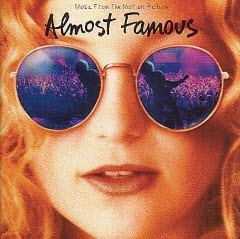
Here’s the best expression I ever heard of this truth. It’s from Cameron Crowe’s film Almost Famous, a story about the coming of age of a critic.

Lester Bangs: Aw, man. You made friends with them. See, friendship is the booze they feed you. They want you to get drunk on feeling like you belong.
William Miller: Well, it was fun.
Lester Bangs: They make you feel cool. And hey. I met you. You are not cool.
William Miller: I know. Even when I thought I was, I knew I wasn’t.
Lester Bangs: That’s because we’re uncool. And while women will always be a problem for us, most of the great art in the world is about that very same problem. Good-looking people don’t have any spine. Their art never lasts. They get the girls, but we’re smarter.
William Miller: I can really see that now.
Lester Bangs: Yeah, great art is about conflict and pain and guilt and longing and love disguised as sex, and sex disguised as love… and let’s face it, you got a big head start.
William Miller: I’m glad you were home.
Lester Bangs: I’m always home. I’m uncool.
William Miller: Me too!
Lester Bangs: The only true currency in this bankrupt world is what we share with someone else when we’re uncool.
William Miller: I feel better.
Lester Bangs: My advice to you. I know you think those guys are your friends. You wanna be a true friend to them? Be honest, and unmerciful.

The world always decides

The world decides

As I write my time travel story today, I’m reminded of a wonderful quote from Ridley Scott’s fine film Kindom of Heaven, written by William Monahan. Orlando Bloom plays Balian of Ibelin. Eva Green plays his love, Sybilla. There is a similar quote in The Kite Runner, but the sentiment is probably as old as human language.

The dialog comes at the very end of the film.


Sybilla: What becomes of us?

Balian of Ibelin: The world will decide. [Looking off.] The world always decides.

Hornblower and the Hotspur

Hornbower and the Hotspur

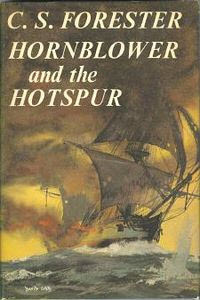
For background for my sea story I’m reading Hornblower and the Hotspur by C. S. Forester.  The Hornblower series is set in the Napoleonic Wars, some eighty years after the period of my story. The characters are decidedly not pirates.  They’re the Royal Navy side of my tale.  For the pirate side I will read other books.

I read the Forester books to glean the nautical terms, the commands, the ship handling and the battle scenes which would have been very similar to the 1720’s when mine is set.

Apropos to children and sea stories, this series was among my father’s favorites.  He started reading them in 1937 at age 34, when the first two were published.  The last was written in the late ’60s.  Lord Horatio Nelson, hero of Trafalgar, was a boyhood hero of my dad’s.  Clearly he was influenced as a child by sea stories. His youth was at the time when Teddy Roosevelt and the emergence of American sea power were in vogue. You can see his stalwart nature and his passion for the navy in this precious portrait of Judge Wilmer Brady Hunt, my dad, when he was, as he would say, still in short pants.

Judge as a Tike

A few lines from my current project.

Pettiprig's Stern

Admiral Squeamish Pettiprig raised an eyebrow. “My three ships can certainly sink Darkrunner’s one,” he said.

“But what if he’s with Nell Flanders?” Roderick asked wagging a finger at the admiral.

Pettiprig shrunk back for a moment before steeling himself once again. “I have good intelligence,” he replied. “That she’s careened her ship on the beach at Flamingo Petite.”

Minutes later Pettiprig’s flotilla sailed off in a rush to Port Left with Foppy Sniggers, who no one noticed lay unconscious on the floor of the wine locker.

Clouds of anger

Trojan Horse

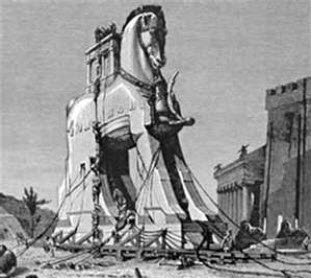
The full title of Homer’s epic poem is The Iliad: The Wrath of Achilles. It is an apt title for its books cover only the period of Achilles’ anger – not the journey to Troy nor its destruction. It occurred to me yesterday, as I navigate my own journey, that the failure of the Greeks to take Troy in a month was less the efforts of the Trojans than the Greeks to appease their own emotions. They spent ten years of slaughter, posturing and fighting amongst themselves before they finally admitted what they should have known from the beginning: They simply could not breach the city wall. They didn’t have the technology. The Spartans couldn’t take Athens until they had built a navy to capture the city by sea.
It wasn’t until the Greeks’s will was broken at Troy on the anvil of their own vanity and rage, and all hope had vanished that the mind of Odysseus, the wily, was clear enough to devise his plan of building the giant horse and hiding its greatest warriors inside. The Greeks could have easily done this following their first defeat.  But pride and determination – qualities we ourselves revere – kept them from grasping the futility of their tactics.
How often is it that our willful denial negates our best efforts? How many times do we throw ourselves against walls instead of clearing our head of roiling emotions? And to turn the argument over and look at a word we think of as positive: How often is unmindful hope our undoing?

Page One of my unpublished children’s novel

Dream IslandsThe opening of the first in the series.

CHAPTER ONE

The Intruder

Not far from where you rest your head at night stand the shimmering skyscrapers of the City of Dreams. Its subways rumble quite softly beneath your bedding. The pale beam of its lighthouse sweeps past your window.

But, although Dream City is as close to your fingertips as the pages of this book, you cannot quite see or feel it. You won’t find it on your maps for it is west of your east and north of your south. It shares your space but not your time, for the city lives between the ticks of your clocks. It was offset from your world by an event that has split time in two, like a railroad switch shifts trains onto different tracks. How that split happened is for another night and another story.

A foggy mile off a wooded coast, the city spreads across three islands named for their shapes: Moon, Star and Comet. The formation was called the Dream Islands by the first inhabitants who believed they were dropped into the sea by Mother Angel when she fell asleep carrying them across the night sky.

Let us begin story the first tale an eon after that happy accident, at two in the morning in Ursa Manor, an apartment building on the east side of Star Island overlooking the cold, deep waters of Moon Straight. …

a first sentence

I’ve been working on a short story until the only thing I had left to do is to figure out how to start it.  I had settled on the scene, but the first paragraph left me cold.   I knew it was a mistake to begin with the setting and the sensations.  They count certainly, but they’re not the thrust of a story which is about a man sitting on a deck with his old friend whom he knows is about to commit suicide, and he’s not going to stop him.  (It’s an end-of-life situation.  The story ends very positively for the protagonist, and for the person who took his own life too in a poetic sort of way.

I needed to lead with the dilemma; the paradox, if you will that explains what men do when nothing can be done. So I took a sentence I had buried in the second paragraph and placed it by itself at the beginning of the story.

 “Luther and I spent nearly an hour talking about the many things that didn’t matter to avoid the one that did.”

Seems better.

Call – Song

Song - Call

I wrote this song. The music came out of a dream that woke me up at 4 AM. In the dream, someone I loved wouldn’t return my call. She was on the run in some way, in a car “inside the rain.” She felt like she had done something wrong and wouldn’t come home.

Humming the tune I went down to my basement and played it in the key I heard in the dream. I only had the melody of the verse and the opening few lines. I added the chorus over the next few days and the other verses by the end of a month.

This video was done soon after I wrote it. The song brought me back to songwriting after decades of rarely touching a guitar.

Call
©2010 Sperry Hunt

1. Call – I can’t call you, please
Call – I’ll be waiting for your
Call. From the darkened lane
In your car inside the rain.

2. If you call me, I’ll be there.
I’ll whisper “Baby” in your hair.
Feel my arms around you.
Pull me inside. Call.

Chorus:
I know why you run.
From what you might have done.
But this is not your world, my girl.
No one saw this heartbreak come.
No one saw this heartache come.

3. They’re empty days since you’ve been gone.
And every night is just so long.
Please don’t stay away.
I’ll bring you home with what I say.

4. I am the moonlight on your breast.
You are the stars in my chest.
Ten thousand miles from home
You don’t have to be alone.

[Repeat Chorus]

5. My arms are strong. My eyes are bright.
I’ll keep them open for the night.
If you feel the same,
You will call me name.

6. I wait and wait for what is real,
For you to tell me how you feel.
A braver girl would say it all,
But she would call.

Character determines wardrobe

A writer’s blog should include an occasional quote. Here’s mine today:

When my granddaughter Erin was three, her grandmother gave her three dresses on one day.

She liked the dresses so much she wore all three for three days, including to bed.

Erin is five now.  She has, shall I say, an extensive wardrobe. Everything she wears is chosen with complete authority.  Any suggestion by others is met with a polite but firm dismissal. 

This morning her dad is bringing her to Seattle to attend our longstanding Superbowl party.  As she was getting dressed – in something festive I’m sure, she turned to her dad and said, “How come grandpa changes his clothes, but he always looks the same?”

Seattle Shakespeare’s Twelfth Night

Twelfth Night

I had a wonderful time at Seattle Shakespeare’s Twelfth Night last evening.  There’s little else that can better remind me of the truths in life than Shakespeare’s comedies.  I had forgotten what a wonderful play this is.  There is no fool like a wise fool, and none is wiser than Feast very ably played by Chris Ensweiler, who pokes great fun at the Puritans who, in Shakespeare’s time, waited in the wings with their sharp knives to fall on the bard’s ideals.  Ensweiler, Carter Rodriquez and Sean Patrick Taylor made wonderful music on stage with dueling Spanish guitars and a lyrical mandolin. Ray Gonzales was terrific as Sir Toby Belch.  He reminds me a bit of the able Powers Boothe, who could not possibly have done a better job.  Gonzales captured Belch perfectly by affording him all the dignity the sod imagines he possesses.   Everyone was wonderful, but most especially Susannah Millonzi whose heartbreaking earnestness brought my entire front-and-center row to tears in the last act.  An uproarious comedy that can make the audience cry is a comedy indeed.  Thanks once again, Seattle Shakespeare.

A change in direction

Coast


I’ve decided to take a change in direction in chosing my next piece.  Having completed the first novel in the Inventors’ Daughter Series and written an extensive chapter-by-chapter outline of  the second, I feel confident that I can take a haitus and return to the series when I am ready.  This feels natural to me, as I try to rotate my crops between whimsical and serious works.

In the meantime, I’m going to write a 5000-10,000 word story about myself and my friends when we were seventeen and eighteen.  It’s a sad story I’ve wanted to tell for many years now and feel I am now able to tell it truthfully.